
By Access Heart Foundation · March 2026 · 8 min read
In the remote villages across Nigeria, where paved roads give way to red dust tracks and electricity is a luxury that flickers at night, a woman has been helping bring life into the world for thirty years. She has no hospital badge. Her clinic is the homestead she was born in. She carries her knowledge in her hands and her memory.
She is a Traditional Birth Attendant and she may be the most important healthcare worker you have never heard of.
At Access Heart Foundation, our work sits at the intersection of maternal and cardiovascular health. Over the years, we have come to understand something that many global health conversations overlook: for millions of women, Traditional Birth Attendants (TBAs) are not a temporary workaround for an under-resourced health system. In many communities, they are the health system.
“She is the first to notice when something is wrong. And often, she is the last person standing between a mother and a tragedy.”
Who Are Traditional Birth Attendants?
Traditional Birth Attendants are community-based practitioners who assist women during pregnancy, childbirth, and the postpartum period. Across many rural communities in sub-Saharan Africa and South Asia, TBAs continue to attend a significant proportion of births.
In Nigeria, their presence is especially prominent. In some communities, TBAs assist with the majority of deliveries and serve as the first point of contact for maternal care.
They are not replacements for trained midwives or obstetricians. They are something different and in many ways, something more immediately accessible. They speak the local language. They understand cultural practices surrounding pregnancy, rest, and diet. They are trusted by families in ways that formal health workers, however skilled, sometimes are not.
For a woman in labour in a rural village, calling the local TBA is often far more feasible than travelling hours to reach the nearest health facility.
Key Fact:
In many communities across Nigeria, TBAs conduct a large proportion of deliveries and often serve as the first point of contact for maternal care.
The Hidden Cardiac Crisis TBAs Are Witnessing
What many health systems fail to recognise is that TBAs are not just birth attendants. They are longitudinal observers.
They see women across multiple pregnancies, across years, sometimes across decades. This places them in a unique position to notice changes in a woman’s health and those changes are often early warning signals.
Globally, hypertensive disorders, cardiovascular conditions, and pregnancy-related cardiac complications are increasingly recognised contributors to maternal mortality. In Nigeria, conditions such as rheumatic heart disease, cardiomyopathy, and undiagnosed valve disorders continue to affect women during pregnancy, often going undetected until complications become severe.
The tragedy is that warning signs are frequently present long before a crisis occurs. Breathlessness. Persistent swelling. Fatigue that feels deeper than the exhaustion of pregnancy.
A TBA who has attended dozens of births often recognises intuitively when something does not feel right.
The real question is whether she has the tools, training, and referral pathways to act on that instinct.
“TBAs are the surveillance network we never built. They are already watching. We just need to equip them to report what they see.”
From Parallel Systems to a Unified Ecosystem
For decades, global health experts debated whether Traditional Birth Attendants should be replaced by formally trained providers or integrated into health systems.
Increasingly, evidence shows that integration when done respectfully and structurally works better than replacement.
The most effective maternal health systems recognise TBAs as essential links in a broader chain of care. Rather than operating in parallel to formal healthcare systems, TBAs can serve as community-level connectors who identify risk early and help women access skilled care when needed.
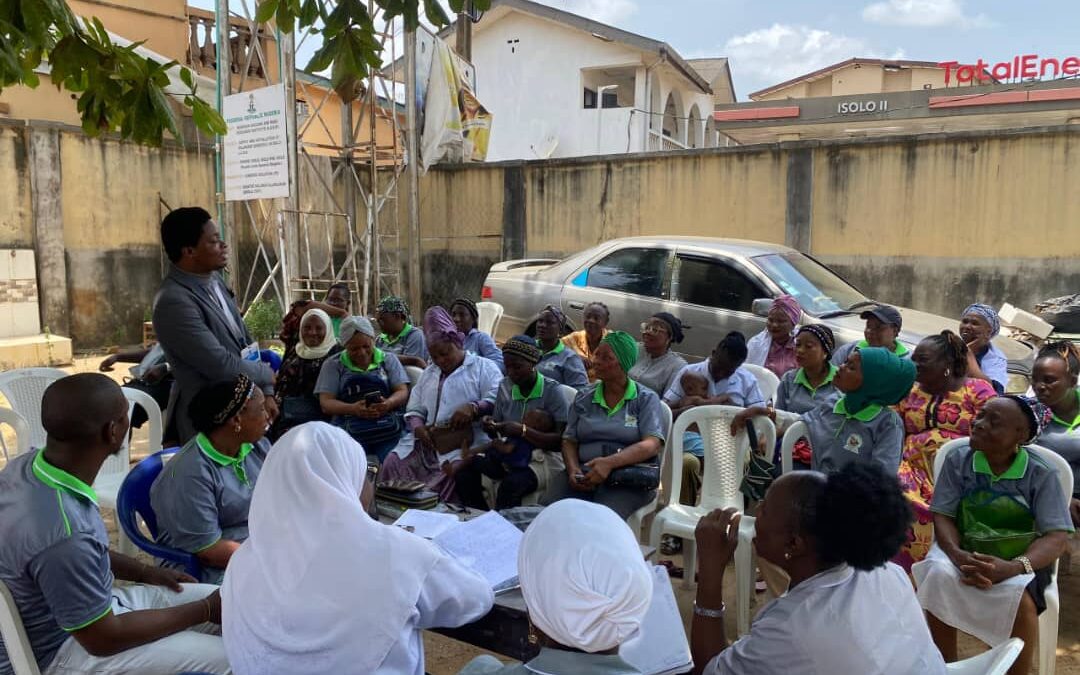
At Access Heart Foundation, our work in Nigeria focuses on bridging this gap. Through community-based maternal and cardiac screening initiatives, we work with local birth attendants to identify women who may be at risk of hypertensive disorders or cardiac complications during pregnancy. These women are then connected to trained midwives and referral hospitals where further evaluation and care can take place.
Our mobile screening programmes rely heavily on the trust and local knowledge that TBAs already hold within their communities. They are often the ones who know which households to visit, which women are pregnant, and which mothers may need urgent care.
Without their partnership, many women would remain invisible to formal health systems.
What we know:
Communities where TBAs are trained and integrated into referral networks often see earlier detection of pregnancy complications and improved pathways to skilled care.
What Meaningful Integration Looks Like
True integration goes beyond simply acknowledging the role of TBAs. It requires practical systems that allow them to participate safely in maternal care pathways.
Based on our work, meaningful integration includes:
1. Structured training on recognising warning signs during pregnancy particularly symptoms linked to cardiac stress and hypertensive disorders.
2. Clear referral pathways that include real contact points, transportation support, and receiving facilities prepared to accept referred patients.
3. Two-way communication between TBAs and formal healthcare providers so that community observations inform clinical care.
4. Formal recognition and compensation for the work TBAs already perform within communities.
When these systems are built thoughtfully, TBAs become powerful allies in strengthening maternal health outcomes.
The Argument for Investment
Health funding often prioritises highly visible, technology-driven interventions. Yet one of the most impactful investments may be strengthening the community networks that already exist.
Traditional Birth Attendants represent the last mile of maternal healthcare delivery in many communities. They determine whether health interventions, no matter how advanced, actually reach the women who need them most.
Training a single TBA to recognise early signs of cardiac distress in pregnancy does more than equip one person. It extends the reach of every cardiologist, midwife, and health programme operating within that region.
The return on investment is measured not only in improved health outcomes but in the preservation of families, communities, and futures.
Looking Ahead
The future of maternal healthcare in Nigeria will not be built solely in hospitals.
It will also be built in communities, where the earliest signs of risk appear long before a woman reaches a delivery ward.
Traditional Birth Attendants are already there.
The question is whether health systems, policymakers, and global partners will recognise them as essential partners in saving mothers’ lives.
At Access Heart Foundation, we are committed to building a healthcare ecosystem where no woman is too far from the care she deserves.
Learn more about our maternal and community health programmes at
accessheartfoundation.org